 (Image source: Gemini)
 Think of your body like a high-end brokerage account. Every meal you eat is either a deposit or a withdrawal. For years, we were told to focus on the balance (calories) rather than the quality of the assets (nutrients). But as we move into 2026, the conversation has shifted. It is no longer just about staying thin. It is about how your food choices today determine your mobility, cognitive clarity, and disease resistance twenty years from now. The 2026 Dietary Guidelines for Americans have finally caught up with what many of us have suspected for a long while.
We are seeing a massive "real food" reset.¹ The focus is moving away from pharmaceutical fixes and toward using nutrient density as a primary tool for chronic disease treatment. Have you noticed how often we talk about "fueling" our bodies? That is a short-term mindset. Long-term health requires us to view food as a complex biological signaling system that talks to our genes and our gut microbes.
Consistent dietary choices impact how your cells age. When you prioritize nutrient-dense foods, you are providing the raw materials for cellular repair. This is especially important because about 60% of adults are currently living with at least one chronic condition.² The goal is to move from simply surviving to optimizing your longevity through precision nutrition.
Colorful Phytochemicals
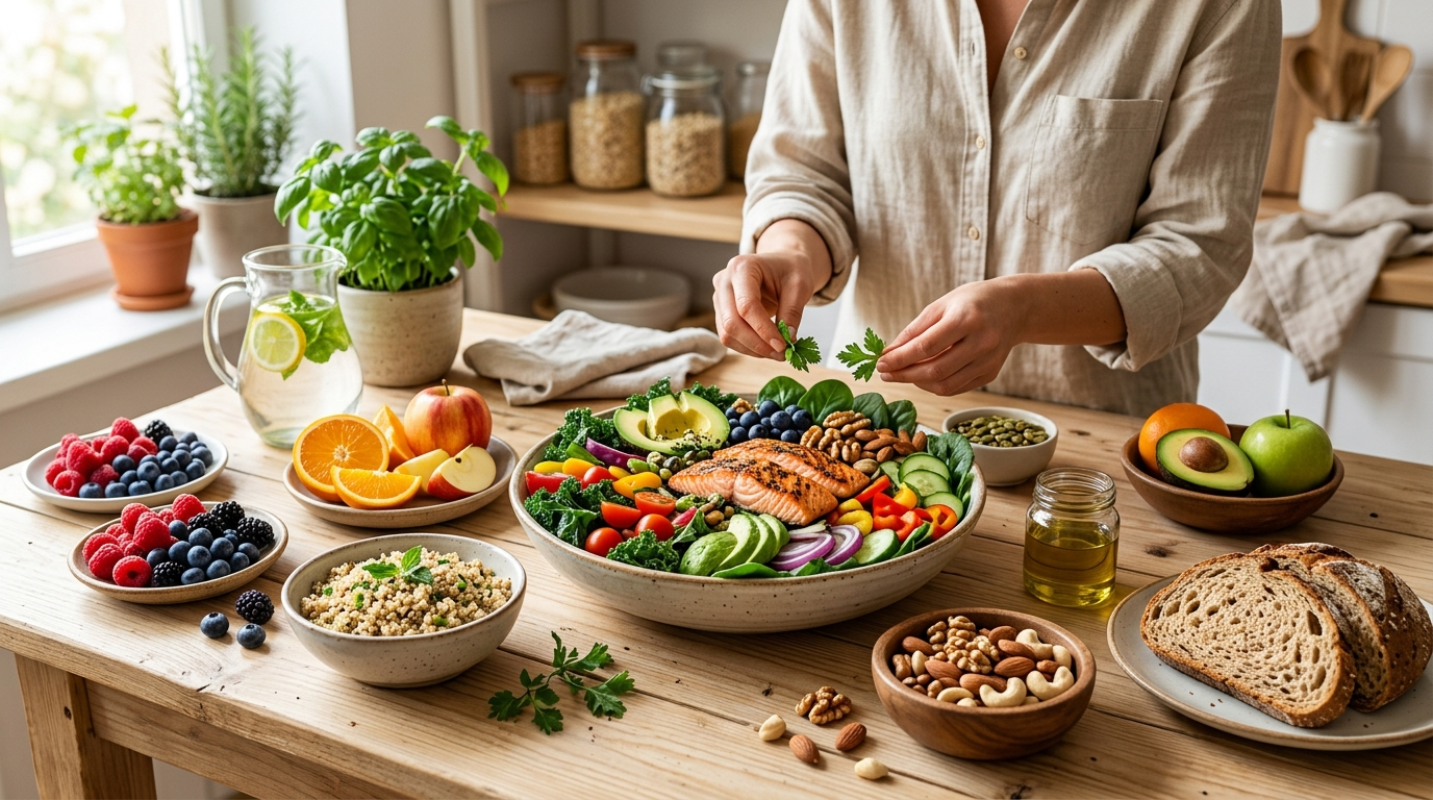
You have probably heard the advice to "eat the rainbow" more times than you can count. But why does it actually matter? It is not just about making your plate look good for social media. Those bright colors represent phytochemicals, which are compounds like polyphenols and antioxidants that help reduce systemic inflammation.
Systemic inflammation is the quiet driver of almost every age-related disease. By flooding your system with a variety of plant colors, you are supporting a diverse gut microbiome. Research from 2026 shows that people who strictly follow a plant-rich, whole-food diet have an 86% higher likelihood of "healthy aging," which means reaching age 70 without chronic disease.³
So what should you be putting in your cart?
- Leafy greens: Spinach, kale, and collards are packed with Vitamin K and lutein, which support brain health.
- Berries: Blueberries and raspberries are high in fiber and anthocyanins that protect your heart.
- Cruciferous vegetables: Broccoli and Brussels sprouts contain sulforaphane, a compound that helps your liver detoxify.
Healthy Fats and Proteins
There is a lot of noise out there about protein and fat. Let’s clear it up. As you age, your body becomes less efficient at processing protein, leading to a condition called sarcopenia (age-related muscle loss). The 2026 guidelines have actually increased protein recommendations for older adults to 1.2 to 1.6 grams per kilogram of body weight.¹ That is a significant jump from older standards.
Experts now suggest an approach called "protein pacing." This means you aim for 25 to 30 grams of protein at every meal rather than saving it all for a big steak at dinner. This keeps your muscle protein synthesis active throughout the day. Although lean animal sources like eggs and Greek yogurt are great, don't overlook plant-based options like tempeh and lentils.
For fats, it is time to stop being afraid. Your brain is about 60% fat, so you need the right kinds to keep it running.
- Omega-3 fatty acids: Found in wild salmon and sardines, these are needed for cognitive health.
- Specialized Pro-Resolving Mediators (SPMs): These are derived from Omega-3s and act as the "resolution" phase of inflammation, helping your body actually finish the inflammatory process rather than letting it linger.⁴
- Monounsaturated fats: Extra virgin olive oil and avocados are the gold standard for cardiovascular protection.
Whole Grains and Fiber
If there is one thing you should focus on "maxxing" out in your diet, it is fiber. It is the ultimate longevity needed. Fiber does not just keep things moving in your digestive tract. It is the primary food source for the bacteria in your gut that produce short-chain fatty acids. These acids are like a "health shield" for your metabolism and immune system.
The math on fiber is pretty impressive. A study recently found that for every 7 grams of fiber you add to your daily intake, your risk of cardiovascular disease drops by 9%.¹ Most people are barely hitting half of the recommended 25 to 38 grams per day. That is a massive missed opportunity for heart health.
Making the switch does not have to be a chore. It is about simple swaps.
- Quinoa and oats: Replace refined white flour with these for more stable blood sugar.
- Legumes: Beans and lentils are the secret weapon of the world's longest-living populations.
- Sprouted grains: These often have higher nutrient availability and are easier on the digestive system.
Approaches for Sustainable Habits
Knowing what to eat is one thing, but actually doing it when you are tired on a Tuesday night is another. Meal prepping is often portrayed as spending eight hours on Sunday, Tupperware-ing your life away. It doesn't have to be that way. You can just prep "components." Roast a big tray of veggies, cook a pot of quinoa, and grill some chicken or tofu.
Eating for longevity also does not have to break the bank. Frozen fruits and vegetables are often just as nutrient-dense (sometimes more so) than fresh ones because they are frozen at peak ripeness. Buying bulk dried beans and grains is another way to keep costs down while boosting your fiber intake.
You should also embrace the 80/20 rule. If you try to be perfect 100% of the time, you will eventually burn out and find yourself in a drive-thru. Focus on nutrient-dense choices 80% of the time. Use the other 20% to enjoy the foods that might not be "superfoods" but make life fun. Sustainability is the only way this works in the long run.
A Healthier Future
At the end of the day, your health is a result of the cumulative effect of small choices. You don't need a "perfect" diet to see massive benefits. You just need to be consistently better. The shift toward precision nutrition and "food as medicine" in 2026 shows that we have more control over our biological destiny than we once thought.⁵
Every time you choose a handful of walnuts over a bag of chips, or a bowl of berries over a sugary dessert, you are sending a signal to your body to repair and protect itself. It is about progress over perfection. Have you ever thought about how much better you might feel in six months if you just increased your fiber and protein today?
The benefit of a nutrient-focused mindset is that it pays dividends for the rest of your life. You aren't just eating for the person you are today. You are eating for the person you want to be at eighty. Start small, stay consistent, and let the science of real food do the heavy lifting for your future self.
This article on beevisit is for informational and educational purposes only. Readers are encouraged to consult qualified professionals and verify details with official sources before making decisions. This content does not constitute professional advice.